
How Often Does a Hipot Tester Need Calibration?
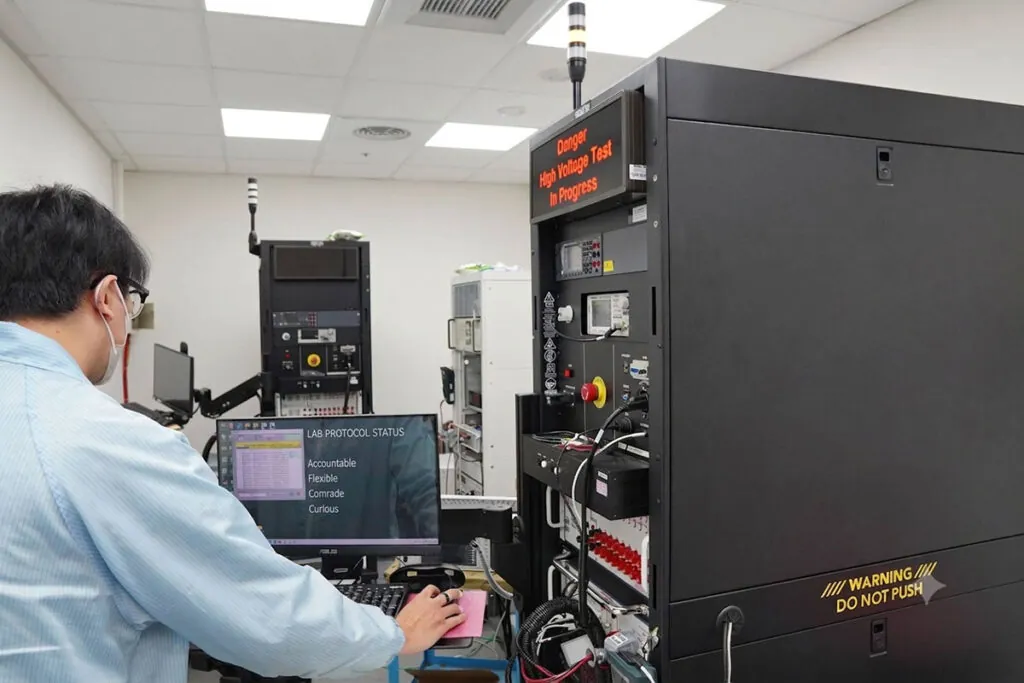
A hipot tester calibration certificate is normally renewed every twelve months by a laboratory accredited to ISO/IEC 17025, the international standard for calibration laboratories. Annual calibration is not the whole requirement. Most certification schemes also expect a functional check against known pass and fail samples at the start of every production shift.
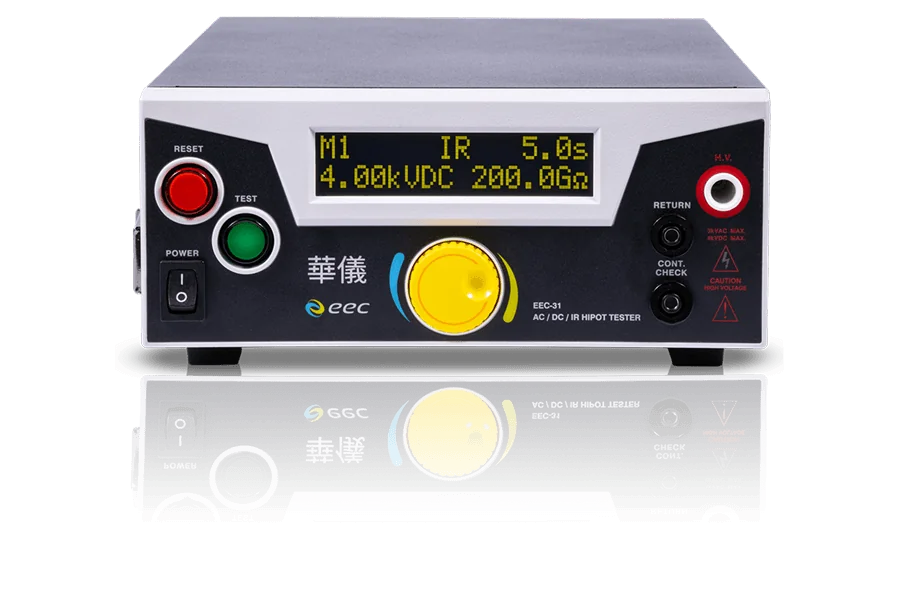
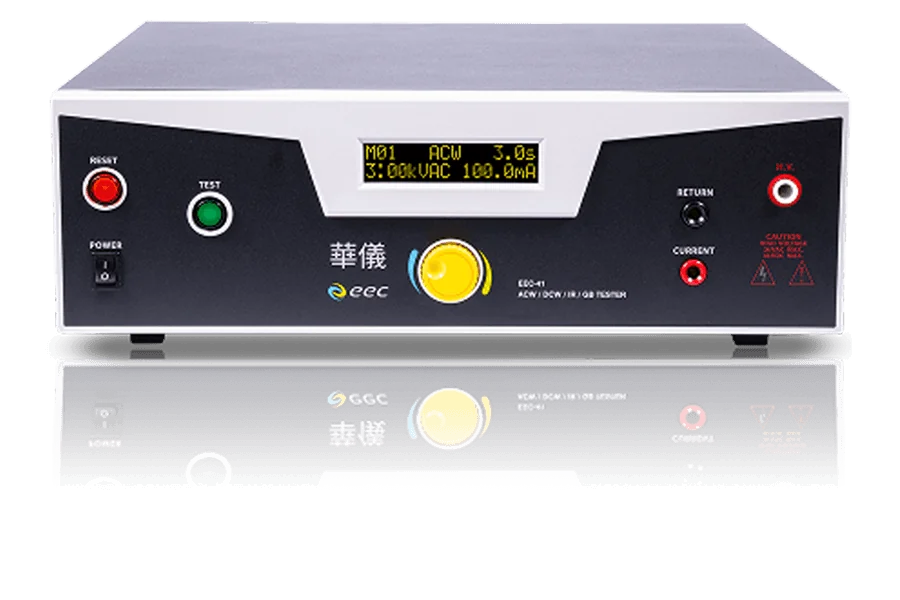
Our repair and calibration support runs from EEC Huayi Taiwan and Malaysia, covering the EEC-31 hipot tester as well as the EEC-41 hipot tester. In this article we will cover the calibration intervals required and how our calibration service works.
Calibration Certificates Run for Twelve Months from the Test Date
A calibration certificate records what a laboratory verified against traceable reference standards on a stated date: the tester’s output voltage, its current and resistance measurement. It’s usually valid for twelve months from that date, and twelve months is a default rather than a rule.
In Compliance Magazine sets out the general position in its users guide to hipot testing: keeping a product’s certification needs a current calibration certificate; the certificate is typically renewed annually; and the certification body will look for ISO 17025 compliance from the laboratory that did the work. That guide describes North American practice, where the requirement arrives through the nationally recognized testing laboratories (NRTLs). Your own certification agency may frame it differently so it is worth checking.
The binding document is the one your certification agency issued, not the general practice. Some agencies ask for less, and so do a good many customer quality systems. Our article on electrical safety test standards covers how IEC, UL and GB requirements differ on what your agency will specify.
Why Certification Bodies Ask for ISO/IEC 17025 Accreditation
ISO/IEC 17025 is the international standard for the competence of testing and calibration laboratories. It covers impartiality and consistent operation as well as technical competence, and accreditation bodies assess laboratories against it.
An auditor will look at the laboratory named on your certificate before they look at anything else on it. A certificate from an unaccredited source can be challenged, and if it is, everything you tested on the strength of it is in question too.
When a Hipot Tester Needs Recalibrating Sooner
These are the common scenarios in which recalibration is recommended:
- If any repair has happened. A unit that’s been opened needs recalibrating before it goes back on the line.
- Physical damage, including a drop or rough handling in transit.
- Readings that vary against a known load, or a shift check that the tester fails when nothing else has changed.
- Heavy use. A tester may require calibration sooner if it is being used 24/7 vs one shift per day.
Daily Functional Tests are Still Recommended
Separately from annual calibration, most nationally recognized testing laboratories ask for a daily functional test against known good and known bad samples, and In Compliance Magazine notes it as a common requirement. This is why the shift check is so important.
How the Shift Check Works
The operator connects the tester to two samples, one designed to pass and one designed to fail, and runs the stored test against each. The tester should pass the first and fail the second. A unit that does both is measuring and switching correctly at the moment the shift starts.
It takes under a minute once the samples are on the bench, and it finds the faults calibration cannot: a lead that has broken inside its insulation, a connection that has worked loose, a setup changed since the last run.
What to Record After Each Shift Check
Log the result with the date, the operator and the unit’s serial number. An auditor will almost always ask for the record rather than a demonstration, and a check that isn’t written down is not possible to prove a year later.
Store the test setup in one of the tester’s three memories, so the check runs identically each morning no matter which operator is on duty. Our article on PLC remote control for hipot testers covers the security modes (Run Only and Memory Lock) that stop a stored setup being altered on the floor.
How to Send an EEC-31 or EEC-41 for Calibration or Repair
Please call us for an RMA before you ship anything. If our engineer determines that your unit does need to come in, we send you an RMA form and shipping instructions by email.
We Guarantee Calibration Within 5 Working Days
We complete most repairs within five working days, and calibration only is guaranteed at 5 working days. If we perform repairs, then the unit will be calibrated once the repair is completed.
- Fast 5-Day Turnaround & Service
- Global ILAN MRA Compliance
- Extended Warranty with Annual Calibration
Requesting Calibration Without a Repair
You can send a unit in for calibration alone, without a repair. Select Repair & Service on the contact form and we’ll confirm what is available for your location. Calibration runs through EEC Huayi Taiwan and Malaysia, so the unit stays in the region rather than shipping overseas and back.
Frequently Asked Questions
How often does a hipot tester need to be calibrated?
A hipot tester calibration certificate is normally renewed every twelve months, and certification bodies expect the laboratory to be accredited to ISO/IEC 17025. Some agencies and customer quality systems set a shorter interval, so check the requirement you were issued rather than assuming twelve months. A tester also needs recalibrating after any repair or physical damage, whatever date the certificate carries. We offer an extended warranty if you have the annual calibration performed by us.
Does a daily shift check replace annual calibration on a hipot tester?
A daily shift check does not replace annual calibration of a hipot tester. The shift check confirms the tester and its leads are working at that moment, using known pass and fail samples. Annual calibration verifies the readings against traceable reference standards and produces the certificate an auditor asks to see. Nationally recognized testing laboratories expect both.
What happens if a hipot tester is used past its calibration date?
A hipot tester calibration certificate is part of the evidence that your production testing was valid. If it has lapsed, an auditor can question every result recorded in that period, and in some cases that means retesting finished stock. The retest costs far more than the recalibration would have, so this is not something to ignore or delay.
How long does EEC Huayi take to calibrate or repair a unit?
EEC Huayi guarantees calibration completion within 5 working days. We also complete most repairs within the same time frame. If your unit is being repaired, then the EEC-31 or EEC-41 will be returned to you calibrated. The 5 days starts from the time we receive your unit.
If a certificate is due, or you are not sure when yours expires, get in touch with EEC Huayi support, select Repair & Service, and an engineer will confirm the options for your location.